
Much like how the Oxford Dictionary adds new words every year, digital marketers invent new terms and acronyms. If you’re not living in this world every day, it can feel like marketers suddenly agreed to start speaking in tongues just to keep everyone else guessing.
Here’s the reassuring part: you don’t need to memorize the buzzwords. You just need to understand what changed and why it matters to your law firm.
SEO Isn’t Gone. It’s Everywhere Now.
Most people have heard of SEO (Search Engine Optimization), although they may not be entirely sure what it means or what it includes. Generally speaking, it used to mean helping search engines like Google understand your content so it could serve it up to users trying to find it. That’s no longer the full picture.
Today, people are looking for answers in a lot of places:
- Google search results
- Google’s AI summaries (aka AIOs)
- ChatGPT, Gemini, Perplexity, and other AI tools
That’s why you’ll now hear people say SEO means Search Everywhere Optimization. The goal isn’t just ranking high on Google, it’s visibility wherever questions are being asked.
What a Search Results Page Looks Like in 2026
When someone searches Google, they land on what is called a SERP (Search Engine Results Page). That page used to have ten blue links, each with a brief description, based on the information you provided. As time moved on, Google added paid search ads, snippets, Google Maps entries, and panels.
Now it’s more like a conversation…that’s becoming interactive.
Google gives you an AI Overview, or summary, right off the top which may or may not answer your question and stop your search. Then you will see some of those traditional blue links, sponsored links and a section on “People also ask” which can take you down a rabbit hole of information which may or may not be related to your first question.
Then:
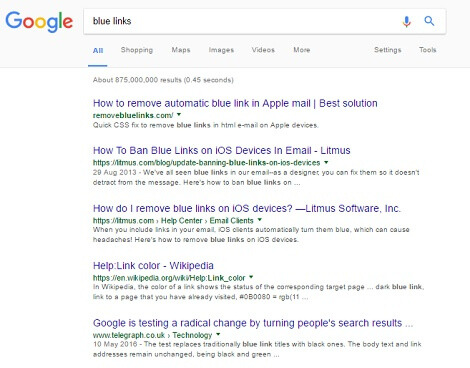
Now:
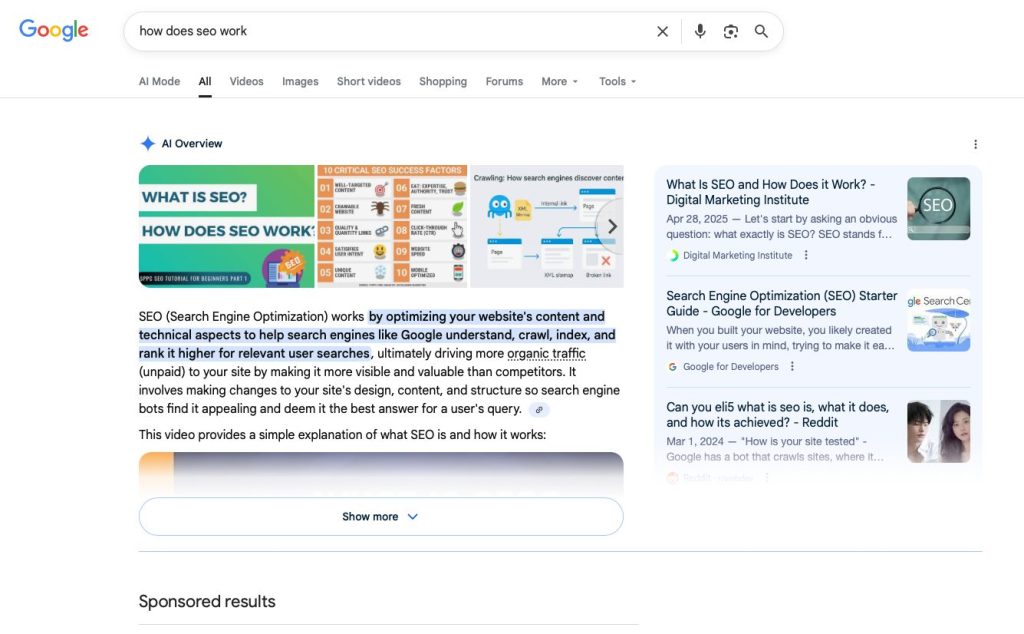
With AIOs appearing at the top of search results, content goals have shifted to include . content that is clear enough that AI will want to reuse it (and cite your firm as a source in the process).
A few new terms come from this shift:
- AEO (Answer Engine Optimization): Writing content so AI tools can pull it directly as an answer.
- GEO (Generative Engine Optimization): Making sure AI systems include or cite your firm when generating responses.
- AIO (AI Overview): Google’s AI-generated summary that often appears before any links as mentioned above.
Why Search Matters for Law Firms
People aren’t just searching “lawyer near me” anymore. They’re asking questions in context:
- “What happens after a first DUI in Alberta?”
- “Do I need a lawyer for an assault charge?”
- What kind of lawyer do I need if I’ve been cut out my mother’s will?
- I signed a prenup under duress, is it valid?
- My employer fired me during my probation period but after I refused to go on a date, what can I do about it?
If your website doesn’t answer those questions clearly, AI will answer them using someone else’s content. Using AI Visibility Tools can help you with GEO or AEO, but most of these tools are in the early stages of growth and measurement. Our advice is to be wary when adopting these tools for measuring success. Start by making simple changes to your approach to content while these tools continue to develop.
How to Move Forward With SEO
You don’t need to chase every new acronym, but you do need to make sure your content is structured to be understood and trusted by both AI and humans. Google’s mission to provide “relevant, useful content” hasn’t changed. When your website consistently provides helpful, easy-to-digest legal answers, you stay visible across search platforms and you stay top of mind when someone is ready to call a lawyer.
Interested in getting help reviewing your marketing content strategy to stay top of mind in a shifting search landscape? Get in touch and we’ll be happy to help you.

